The Alberta government has issued Industrial Railway Circular No. 1 (Guideline for the Transfer of Dangerous Goods to or from a Railway Vehicle).
Although only a 7 page document, there are 11 sections:
General
Exceptions
Notification/site selection
Primary selection criteria
Additional selection criteria
Approvals
Inspections
Training
Documentation
Notification
Regulatory requirements
The guideline falls under the Railway (Alberta) Act and applies to companies that intend to transfer dangerous goods to or from a railway vehicle. This circular does not apply to Class 1 Explosives. These must be handled under the Federal Handling of Carloads of Explosives on Railway Trackage Regulations.
Railways that intend to construct or connect railway track to a service provider or construct railway works must have approval from the provincial government. Site selection is done in accordance with sections 4 and 5, and if the criteria cannot be met, the application may still be considered if an equivalent level of safety can be demonstrated.
The guideline suggests a dangerous goods transfer track/rack should meet minimum distances from residences, commercial establishments, schools, hospitals, recreation centres, etc..
Dangerous Goods Class
Distance
2.1
100 m
2.2
50 m
2.3
250 m
2.3
450 m
3 excluding inhalation hazard materials
50 m
4.1 molten sulphur
100 m
5.1 excluding inhalation hazard materials
50 m
6.1 excluding inhalation hazard materials
100 m
8
100 m
9
50 m
In addition, the site shall not be located next to busy highways, under a bridge or overpass, next to transformers, power lines, sources of ignition, etc.. The site shall be located so that emergency responders can access it as well as be near an emergency water source.
A company that intends to transfer dangerous goods from or to a railway vehicle must have operating approval from the Alberta Transportation Railway Administrator.
A competent person who is trained in the Transportation of Dangerous Goods Regulations and is familiar with this Circular and the Industrial Railway Regulations must make periodic inspections looking for leaks, and if found, knows who to notify. Written records of all inspections must be kept for two (2) years after the rail cars have been released from holding.
A person who will be loading, unloading or transferring dangerous goods must be trained in the Industrial Railway Employee Qualification Standards. This person must also have a working knowledge of tank cars, fittings, products being transferred, and placarding requirements. This person must ensure that the correct documentation is provided to the carrier. In the event of an emergency involving dangerous goods, the person must provide emergency response information.
In the event of an incident or leakage of dangerous goods, CANUTEC, the local RCMP and the Alberta Transportation Coordination and Information Centre (1.800.272.9600) must be notified.
Regulatory requirements for loading of dangerous goods include:
ensuring all fittings and safeties are in proper condition
bottom discharge outlets must have caps and plugs removed
tank cars with heater coils must have inlet and outlet caps removed
sufficient ullage must be in the tank car
Regulatory requirements for loading or unloading of dangerous goods include:
dangerous goods that have a primary or subsidiary class of 2.1, 3, 4 or 5 must be grounded/bonded to prevent exposure to ignition sources or static electricity
hand brakes applied, 1 set of wheels blocked/chocked in both directions
track protection using locked switches or derails
use of caution signs set at either end of the track
keeping the immediate area free of combustible and other non-compatible materials
by James Henry, CDGT, CET on December 10, 2012 at 8:00 am · in Jim's Blog, Regulations
Transport Canada published in Canada Gazette, Part I, the amendment titled “Part 4 Dangerous Goods Safety Marks”. Notable changes include:
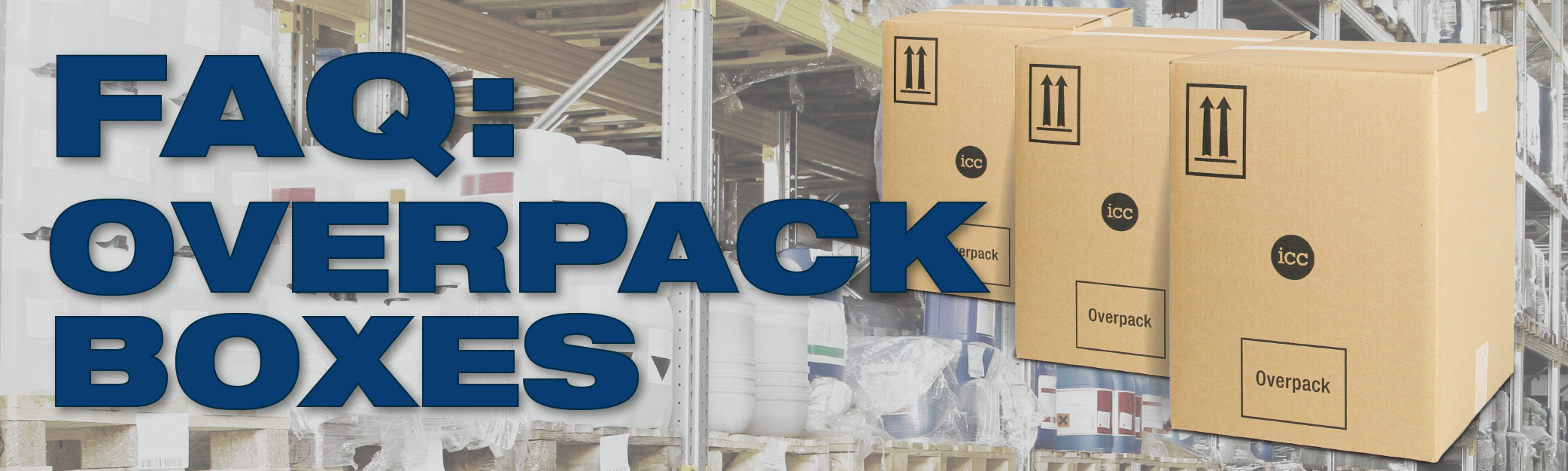
introduction of overpacks
modifications to the use of the DANGER placard
introduction of new safety marks (3)
new proposal for placarding large means of containment
Let’s start with the overpacks. Currently under TDG, overpacks are not recognized although they are being used. And this is causing enforcement issues. TC considers an overpack to be a large means of containment. The definition for overpacks will be added to section 1.4 of TDG. Safety marks for overpacks is covered in section 4.10.1. As part of this section, when the overpack has a capacity ≥ 1.8 m3, then safety marks must appear on two opposite sides of the overpack.
All the safety marks are in the UN Model Regulations, ICAO Technical Instructions, IMDG Code and 49 CFR.
The requirements for placards will undergo a major change. The table in TDG section 4.15 is replaced. Placards will be required on both ends and sides of a large means of containment. The subsidiary placard requirements do not change. UN numbers on a placard or orange panel will be required when an ERAP is required, or the dangerous goods are liquids or gases in bulk. IBCs (intermediate bulk containers) will be permitted to only have 2 placards with UN number on opposite sides, or a label and UN number on each side. This will remove the need for equivalency certificates. However, placards with UN numbers will be needed on the outside of the truck.
The use of the DANGER placard changes as well. The DANGER placard can be displayed in place of hazard class placards when there are 2 or more classes and there are 2 or more small means of containment. The current restrictions for the use of the DANGER placard do not change, but those restrictions now include:
gross mass not to exceed 1,000 kg,
not to include only one hazard class, and
are offered by one consignor at one location.
The 500 kg requirement for placards is found in section 4.16.1 with the restrictions being very similar to the restrictions currently found in the exemption 1.16 500 kg gross mass exemption. If any part of a shipment involves a restriction that is listed, then that amount is not used in the calculation for determining placards. For example, if a shipment consists of 2,300 kg of dangerous goods, with 2,000 kg being sodium, then that shipment will require the hazard class placard with UN number as it requires an ERAP. The remaining 300 kg, being under the 500 kg, will not require placards.
The wording of section 4.22.1 for the Category B mark has been changed to read that the Category B mark replaces the Class 6.2 hazard label.
For dangerous goods that are subject to special provision 23, it will now be required to add the words “toxic – inhalation hazard” next to the shipping name for small packages, and on the large means of containment, in addition to any required placards.
The purpose of this amendment is harmonize with the international regulations as well as with 49 CFR. There may be additional costs to carriers for implementing these changes, but TC is of the opinion that for carriers who do business in the US, they will already have the additional placard holders on their trucks.
Transport Canada has given 75 days for comment from December 1, 2012. Comments are to be sent to:
Genevieve Sansoucy, Legislation and Regulations, Transport Dangerous Goods Directorate, Department of Transport, Place de Ville, Tower C, 9th Floor, 330 Sparks Street, Ottawa, Ontario K1A 0N5 (tel.: 613-990-5766; fax: 613-993-5925; email: TDGRegulatoryProposal-TMDPropositionReglementaire@tc.gc. ca).
by James Henry, CDGT, CET on December 7, 2012 at 1:53 pm · in Jim's Blog, Regulations
Transport Canada published Amendment 11 in the Canada Gazette, Part II on December 5, 2012. In Amendment 6 (February 2008), a number of errors were introduced. This amendment corrects those errors, and brings others into line with some changes to the Act (June 2009).
The changes in this amendment are:
definition of “person” now aligns with the definition in the Act, including the addition of “organization”,
section 1.15 150 kg Gross Mass Exemption has been changed to allow up to 6 aerosols to be transported without complying with Part 5 Means of Containment. However, the aerosols must have a valve protection cap; in addition, special provision 80 has been changed to provide consistency,
section 5.5 Filling Limits goes back to the wording prior to Amendment 6 so as to remove any confusion and misinterpretation regarding standards or safety requirements,
the placarding provisions of the IMDG Code have been placed in Part 9 Road and Part 10 Rail; this allows for the placarding under the IMDG Code which means that placarding requirements are simpler and will reduce if not eliminate confusion,
other changes are of an editorial nature or typo:
in section 2.29(2)(c), 0.2 g/L now reads 0.2 mg/L
in the restricted paragraphs of section 1.15 and section 1.16, the title for Class 4 has been corrected
in section 1.32.1, the shipping name Liquefied Petroleum Gas now reads Liquefied Petroleum Gases
table of contents for Part 2 Classification now shows Category A and Category B instead of risk groups
in part 2, appendix 3, item 3, the word “formerlly” is changed to read “formerly”
section 1.32.2 Gases, Absolute Pressure between 101.3 kPa and 280 kPa now reads 1.32.2 Class 2, Gases, Absolute Pressure between 101.3 kPa and 280 kPa
in section 1.47 UN1044, Fire Extinguishers, Exemption, “and (d)” is added after “Paragraphs 5.10(1)(a)(b)”
Although these changes come into force on December 5, there is a transition period of six months (June 5, 2013) before all the changes become mandatory.
A question we are often asked at ICC Compliance Center is “how small does a dangerous goods shipment have to be to not be regulated?” Not just limited quantity, not just excepted quantity – totally not regulated. Common sense tells us that, at a certain level, tiny amounts of dangerous goods do not pose a hazard during transport. Unfortunately, until recently, this question was not really addressed directly, other than by using other small quantity provisions, such as limited quantities.
However, the UN Subcommittee on the Transportation of Dangerous Goods has been working on this issue, and the question has started to be answered by various regulations based on the UN Recommendations. For example, starting in 2013, shippers by air who use the ICAO Technical Instructions for the Safe Transport of Dangerous Goods (TIs), and the IATA Dangerous Goods Regulations (DGR), will be able to ship very small amounts of dangerous goods as non-regulated under the so-called “de minimis” provisions.
The 54th Edition (2013) of the DGR has a new section, 2.6.10, which establishes the procedures for shipping as a de minimis quantity. The procedure is as follows:
Look up the goods being shipped on the List of Dangerous Goods (Table 4.2), and check the Excepted Quantity code given in column F. If the code is E1, E2, E4 or E5, the goods can be shipped as de minimis, if they meet the following requirements. (If the code is E0 or E3, unfortunately, de minimis is not an option.)
Package the goods as you would excepted quantities, using the instructions in DGR section 2.6.5. Note that, despite this section, intermediate packaging (such as a leakproof bag) is not required if the inner packagings are securely packed in an outer packaging with cushioning material, in such a way that they could not:
break,
be punctured, or
leak their contents
under normal conditions of transport. Also, if they are liquids, there must be enough absorbent material to absorb the entire contents of the inner packagings.
The quantity limits for a de minimis package are:
For inner packagings, not more than 1 mL for liquids and gases, or 1 grams for solids, and
For outer packaging, not more than 100 mL for liquids and gases, and 100 grams for solids.
Finally, review the package testing requirements given in section 2.6.6. Although the package does not have to be UN-specification tested, this section says that the package must be capable of withstanding, “as demonstrated by testing which is appropriated documented,” a drop test and a 24-hour stacking test. These are simple tests that can be done in-house; however, as the section says, they should be documented. Notes of the test, and digital photographs, if possible, should be kept on file regarding the packaging.
Once you have met these requirements, the DGR says that the de minimis package will be “not subject to these Regulations”. So, other requirements, such as dangerous goods shipping papers, or package markings, will not apply.
Do remember that this section is new to the 54th edition of the IATA DGR. Until January 1, 2013, these provisions may not be used.
If you have questions about using de minimis quantities, please contact ICC The Compliance Center Inc. at 1-888-977-4834 (Canada) or 1-888-442-9628 (USA).
by James Henry, CDGT, CET on September 4, 2012 at 9:40 am · in Jim's Blog
Based on the information available to date, the following are some of the changes that will be in the 2013 editions of the IATA Dangerous Goods Regulations and the IMDG Code.
lithium ion batteries > 100 Wh but < 160 Wh may be carried as spare batteries in carry-on baggage
portable electronic devices containing batteries should be in carry-on baggage and be protected to prevent short circuits
medical devices or equipment that contains or may contain infectious substances are not subject to the regulations provided that the item is packed so that there will not be any leakage
packages containing medical devices or equipment must be marked “Used Medical Device” or “Used Medical Equipment”
lithium cells and batteries must be of a type proved to meet the UN Manual of Tests and Criteria
dangerous goods list additions:
UN3496 batteries, nickel metal hydride
UN3497 krill meal
UN3498 iodine monochloride, liquid
UN3499 capacitor
UN3500 chemical under pressure, n.o.s.
UN3501 chemical under pressure, flammable, n.o.s.
UN3502 chemical under pressure, toxic, n.o.s.
UN3503 chemical under pressure, corrosive, n.o.s.
UN3504 chemical under pressure, flammable, toxic, n.o.s.
UN3505 chemical under pressure, flammable, corrosive, n.o.s.
UN3506 mercury contained in manufactured articles
dangerous goods list deletions:
UN3492 toxic by inhalation liquid, corrosive, flammable, n.o.s.
UN3493 toxic by inhalation liquid, corrosive, flammable, n.o.s.
the excepted quantity code for the various silanes has changed to E0
special provision 240 applies to vehicles powered by batteries, such as, scooters, e-bikes, wheelchairs, etc. Hybrid vehicles must be consigned under one of the following: UN 3166 Vehicle, flammable gas powered or UN 3166 Vehicle, flammable liquid powered, as appropriate. Vehicles which contain a fuel cell shall be consigned under the entries UN 3166 Vehicle, fuel cell, flammable gas powered or UN 3166 Vehicle, fuel cell, flammable liquid powered, as appropriate.
special provision 304 is now about transporting non-activated batteries
special provision 360 is for lithium battery powered vehicles consigned under UN3171
special provision 361 is for electric double layer capacitors with energy storage capacity > 0.3 Wh
special provision 362 is for liquids, pastes or powders that are pressurized with a propellant
special provision 363 is for dangerous goods in equipment where the dangerous goods are in excess of the limited quantity index
new packing instructions for chemicals under pressure (et al) UN3500 – UN3505
the marking of the identification number on packages must be a minimum of 12 mm in height, including the prefix UN, except for packages of < 30 L/ kg, where the info must be 6 mm in height
new warning mark for containers that use dangerous goods for cooling or conditioning purposes
for UN0336 and UN0337, the shipping document must include the classification reference issued by the competent authority
in addition, there are editorial updates – i.e. punctuation changes, spelling corrections, etc. that are too numerous to list.
Please keep in mind that as of January 1, 2013, the IATA Dangerous Goods Regulations, 54th Edition, will come into force – no transition period. The IMDG Code, Amendment 35-10 will still be in force for 2013. Amendment 36-12 is optional for 2013, but becomes mandatory in 2014. In other words, 2013 is the transition period for Amendment 36-12.