
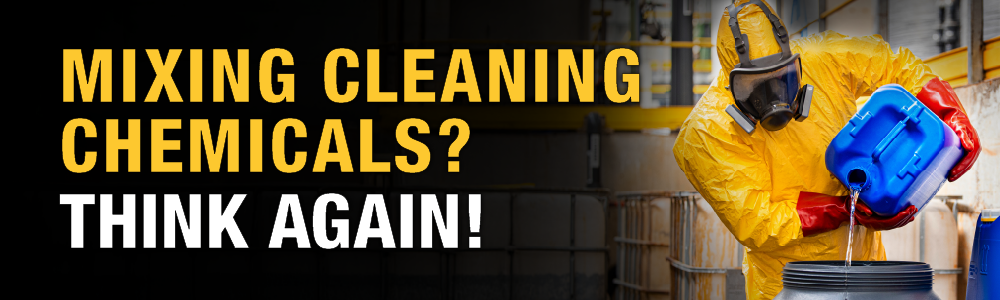
Why You Should Never Mix Cleaning Chemicals
When it comes to cleaning, it’s tempting to think that mixing products might make your efforts more effective. Unfortunately, that assumption can lead to harmful—even deadly—consequences.
Mixing certain cleaning chemicals can cause toxic reactions, fires, or long-term health hazards, whether you’re scrubbing your kitchen at home or sanitizing a workplace. Understanding which products to not mix is essential for staying safe.
A Real-World Example: Madison, WI Incident
On May 9, 2025, the Madison Fire Department responded to a hazardous situation on the city’s east side. A resident was cleaning their washing machine using two common products: Scrubbing Bubbles, bathroom cleaner and bleach. After noticing a strong, noxious odor, the individual called 911 and left the house.
The Madison Fire Department’s Hazardous Incident Team confirmed that the mixture triggered a chemical reaction, releasing dangerous fumes. They ventilated the basement and ran the washing machine through several rinse cycles to neutralize the chemicals safely.
This incident serves as a strong reminder that even everyday products can cause toxic reactions when used improperly.
The link to the news story can be found HERE.
Why Mixing Cleaners Is Dangerous
Household and industrial cleaners often contain potent active ingredients that break down grime, eliminate bacteria, or remove stains. However, combining them can trigger chemical reactions that release toxic gases or produce heat, resulting in:
- Respiratory distress
- Chemical burns
- Corrosion of surfaces and equipment
- Evacuation-level emergencies
Dangerous Chemical Combinations to Avoid
Here are a few chemical combinations you should never mix—at home or in the workplace:
- Bleach + Ammonia = Chloramine Gas
This can result in:
- Shortness of breath
- Chest pain
- Eye, nose, and throat irritation
- Severe lung damage with prolonged exposure
- Bleach + Vinegar = Chlorine Gas
This can result in:
- Coughing
- Breathing difficulty
- Burning eyes and throat
- Potential long-term respiratory injury
- Hydrogen Peroxide + Vinegar = Peracetic Acid
This can result in:
- Corrosive acid fumes
- Skin and respiratory irritation
- Risk of damage to stainless steel or rubber surfaces
Elevated Risks in Professional Environments
In professional settings—hospitals, restaurants, offices, and factories—the risks are even higher due to the use of stronger industrial-grade cleaners and more frequent cleaning cycles. This is why workplace safety regulations, such as those from OSHA (Occupational Safety and Health Administration), are critical.
Key Workplace Safety Practices
Here are several important safety practices for workplaces:
- Labeling & Storage: Always label chemicals and store them in original containers. Never reuse bottles or mix leftovers.
- Safety Data Sheets (SDS): Maintain and review Safety Data Sheets (SDS) for all cleaning products, which outline hazards and incompatible substances.
- Training: Employees should receive training on proper chemical handling and emergency procedures.
- Personal Protective Equipment (PPE): Gloves, goggles, and ventilation masks should be provided when dealing with strong cleaners.
- No Unauthorized Mixing: Only trained personnel should handle chemicals, and they should never mix products unless explicitly instructed to do so in the Safety Data Sheet (SDS).
Workplace accidents involving chemicals can lead to serious injuries, lawsuits, OSHA violations, and business shutdowns. Prevention is key. Safe Cleaning Tips for Everyone
Safe Cleaning Tips for Everyone
Whether at home or on the job, follow these universal safety principles:
- Read labels carefully
- Avoid mixing products
- Ventilate rooms during and after cleaning
- Rinse surfaces before switching cleaners
- Wear protective gear if needed
- Report or address strong odors immediately
- Call emergency services if fumes become overwhelming
Final Reminder
The science is clear: Never mix cleaning chemicals. The incident in Madison, WI proves that even a routine task can spiral into an emergency when products are combined improperly. This is equally true in the workplace, where industrial-strength cleaners and poor training can create serious hazards.
Protect yourself, your family, and your coworkers. Clean smart. Clean safe.
Do you have any questions about labeling requirements for hazardous products? Our team of experts is just a call away for our customers at 855.734.5469 or send us an email, we’re happy to help.
Stay up to date and sign up for our newsletter!
We have all the products, services and training you need to ensure your staff is properly trained and informed.
 Safety Data Sheet Safety Data Sheet(SDS) Services |
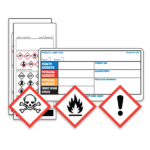 GHS Labels GHS Labels |
 GHS within WHMIS GHS within WHMISTraining Course |


