
 What Are DDR Lithium Batteries?
If you regularly ship lithium batteries, you may be very familiar with 173.185 in the 49CR, Special Provision 34 in TDG, or Packing Instruction 965 in IATA, to name a few regulatory references. Of the many more regulations out there that I haven’t mentioned, depending on your mode of transport and various other factors, it’s easy to fall into the lithium battery rabbit hole. In your travels, you may stumble across the term defective, damaged, or recalled batteries (DDR). As you navigate, you probably will come to the realization that DDR batteries are a completely different animal.
Understanding Defective, Damaged, or Recalled Batteries
DDR batteries fall into one of three categories, defective, damaged, or recalled depending on specific criteria. These types of batteries are mentioned at 173.185 (f) in the 49CFR, Special Provision 137 in TDG, and Special Provision 376 in the IMDG Code. As a shipper, it is your responsibility to find out if the battery has been recalled by the manufacturer or assess the condition of a lithium battery to determine whether it is damaged or defective before preparing it for shipment, although you may also rely on a technical expert with knowledge of the lithium battery from the product manufacturer as well. Ultimately, this means that you must be aware of specific criteria to determine if the battery is damaged or defective.
How to Identify a DDR Battery
PHMSA has released a document that provides guidance to help you determine if the battery is damaged or defective based on both non-visual and visual factors. Nonvisual factors include the condition of external and internal short circuit protection, voltage or isolation measures, the integrity of the safety features for the lithium cell or battery, and any internal safety components, such as the battery management system.
Common Visual Signs of Damage
Visual factors are easier to identify, and they may include identifiable signs of damage such as:
- Gas, fire, or noticeable leaking electrolytes
- Physical or mechanical issues like swelling compared to the battery’s original state
- Discoloration of the casing
- Unusual smells or corrosion
- Loose or damaged wires
- Evidence of improper use or known misuse conditions.
Why DDR Batteries Are More Dangerous
All lithium batteries carry a potential fire hazard, but damaged, defective, or recalled (DDR) batteries present an even higher risk during transport. These batteries are more prone to igniting through a process called thermal runaway. Thermal runaway results in a rapid increase of battery cell temperature and pressure, accompanied by the release of flammable gas, causing the battery to overheat, catch fire, or explode. The dangerous goods regulations are more stringent when shipping these types of batteries, and they are even forbidden to ship by air completely.
Special Packaging Requirements for DDR Batteries
It is very important that the correct packaging is used when shipping DDR batteries, as the requirements, especially in The United States, are different than shipping a regular battery. Unless you have a special permit, you are only allowed to put one battery inside of your packaging, and 4G boxes are not allowed per the 49CFR.
ICC The Compliance Center’s DDR Battery Solutions
Luckily, here at ICC The Compliance Center, we do have a Special Permit that allows users to ship multiple batteries inside of a 4G box using Extover® Fire Extinguishing Agent. If you are interested in custom packaging for DDR batteries, feel free to contact us at 1-888-442-9628.
Stay up to date and sign up for our newsletter!
We have all the products, services and training you need to ensure your staff is properly trained and informed.
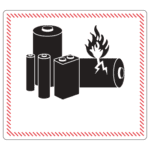 Lithium Battery Mark Lithium Battery Mark |
 Extover® Extover® |
 4G Packaging 4G Packaging |
Reference to PHMSA’s Brochure on DDR Batteries:
https://www.phmsa.dot.gov/sites/phmsa.dot.gov/files/2023-03/DDR-brochure.pdf


 ICC USA
 ICC Canada