
 Fire Prevention Week: Is Your Workplace Charging Safely?
From handheld scanners and power tools to laptops and warehouse equipment, lithium-ion batteries are part of the daily routine in many workplaces. Their charging stations can become so familiar that it is easy to overlook the risks around them.
Fire Prevention Week runs October 4–10, 2026. This year’s National Fire Protection Association (NFPA) theme, “Charge into Fire Safety: Safe Charging Is a Superpower,” offers a timely reason to review how batteries are charged, stored, and handled across your operation.
Where Do Charging Risks Show Up at Work?
Lithium-ion batteries store a significant amount of energy. A battery that is damaged, defective, overheated, or charged improperly may enter thermal runaway—an uncontrolled rise in temperature that can lead to fire, explosion, and the release of hazardous gases. The Canadian Centre for Occupational Health and Safety (CCOHS) advises employers to develop charging procedures based on the equipment manufacturer’s instructions and the applicable workplace, electrical, building, and fire requirements. For a closer look at workplace hazards and controls, read ICC’s article Lithium-ion Battery Safety in the Workplace.
Consider the places where charging happens in your facility. Is a power tool battery charging beside cardboard packaging? Are employees using whatever charger happens to fit? Could a charging device obstruct an exit or go unnoticed if it begins to overheat? These are practical questions to take into a workplace walkthrough.
Five Checks for Fire Prevention Week
- Check batteries and chargers before use. Use batteries and chargers approved by the manufacturer. Remove any battery that is swollen, leaking, unusually hot, damaged, or producing an unusual smell or sound from service. Do not charge a battery that may be damaged or defective.
- Review charging locations. Charge devices on a stable, hard surface and keep them away from cardboard, paper, and other combustible materials. Keep exits and access to emergency equipment clear. Assess charging areas against the equipment manufacturer’s instructions and the fire and electrical requirements that apply to your facility. ICC also has guidance on storing lithium batteries and reducing related hazards.
- Set clear charging procedures. Follow the manufacturer’s instructions, including when to disconnect a fully charged device. Make sure employees know which chargers belong with which equipment and where charging is permitted. Avoid improvised connections and extension cords where the manufacturer’s guidance or site procedures prohibit them.
- Plan for a battery that fails. Make it easy for employees to report warning signs and know whom to notify. If a battery smokes or catches fire, evacuate the area and call emergency services. Review your emergency response procedures with the people who use, maintain, and store battery-powered equipment.
- Follow the battery beyond the charging station. A battery removed from service may later be returned, recycled, or shipped. Before moving it, determine whether it is damaged, defective, or recalled. That condition can change the applicable transport requirements, including whether the shipment is permitted and what packaging is required. For more on this distinction, read ICC’s guide to DDR lithium batteries.
Make the Review Part of Your Routine
Fire Prevention Week is a useful starting point, but the practices that prevent incidents must carry through the year. Walk through charging areas, update procedures where needed, and make sure employees understand both the warning signs of battery failure and the steps to take when they see them.
Need Help With Lithium Battery Compliance?
Have questions about battery types, classification, or shipping requirements? Explore ICC’s Lithium Battery FAQ for answers to common questions.
If your team handles or ships lithium batteries, ICC can help you review the applicable dangerous goods requirements and identify the training and packaging your operation needs.
Stay up to date and sign up for our newsletter!
We have all the products, services and training you need to ensure your staff is properly trained and informed.
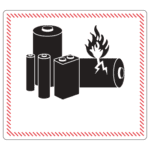 Lithium Battery Mark Lithium Battery Mark |
 Extover® Extover® |
 4G Packaging 4G Packaging |


