
 New TDGR Part 12: Key Changes for Air Shippers
If you ship dangerous goods by air in Canada, it may be time to become reacquainted with Part 12 of the Transportation of Dangerous Goods Regulations (TDGR).
And when we say Part 12 has changed, we are not talking about a few words being added here or a subsection being renumbered there. Part 12 Air has been completely rewritten and reorganized.
ICAO Takes Centre Stage
One of the most noticeable features of the new Part 12 is its relationship with the ICAO Technical Instructions. Unless Part 12 provides otherwise, a person who imports, offers for transport, handles, or transports dangerous goods by aircraft must comply with the applicable requirements of the ICAO Technical Instructions. Part 12 then identifies Canadian requirements, interpretations, and exemptions that modify or supplement those international requirements.
So, what should dangerous goods professionals pay particular attention to?
Training Requirements
Training continues to be an important part of air compliance. The new Part 12 applies Chapter 4 of Part 1 of the ICAO Technical Instructions, as well as the applicable requirements of Part 6 of the TDGR.
One important detail is record retention. Employers and self-employed persons must retain the required training records, statements of experience and copies of training certificates for 36 months, beginning on the first day of the month in which the most recent training and assessment were completed.
The Air Transport Document Remains on Paper
Despite the increasing use of electronic documentation throughout industry, the new Part 12 specifically requires the dangerous goods transport document for air transportation to be provided on paper.
It must also continue to have the familiar red hatching along the left and right margins.
Another significant point is record retention. A consignor must be able to produce a copy of the required transport document for one year after the day it was prepared. Carriers have a corresponding one-year retention requirement measured from the day of the flight.
For dangerous goods requiring an approved Emergency Response Assistance Plan (ERAP), the document must also contain the ERAP reference number and ERAP telephone number, identified with “ERAP” or “PIU.”
Canadian Requirements Still Matter
Following the ICAO Technical Instructions does not mean that Canadian requirements disappear.
For example, Part 12 contains Canadian provisions dealing specifically with Class 1 explosives, Class 2 gases, Class 7 radioactive material, and Class 9 dangerous goods.
For Class 7, LSA-I and LSA-II material must be classified in accordance with the Packaging and Transport of Nuclear Substances Regulations, 2015, rather than the corresponding ICAO classification provisions. Part 12 also directs the packaging of LSA material and surface contaminated objects back to those Canadian nuclear transport regulations.
Reporting Requirements Are Now Easy to Find
The rewritten Part 12 brings substantial air-specific reporting requirements directly into the Part.
Following a dangerous goods accident or incident, the carrier must report to CANUTEC as soon as possible. If Class 7 radioactive material is involved, the Canadian Nuclear Safety Commission must also be notified.
The Part also establishes requirements for a 30-day follow-up report, reporting undeclared or misdeclared dangerous goods, and reporting certain dangerous goods occurrences.
Limited Access Locations Get Considerable Attention
Perhaps one of the most interesting portions of the rewritten Part 12 is the treatment of limited access locations.
The new Part defines a limited access location as a location where there is no year-round access by a mode of transport other than air.
Sections 12.30 through 12.38 then establish specific provisions for transporting certain dangerous goods directly to or from these locations. The provisions address several commonly needed products, including:
- Class 2.1 and 2.2 gases;
- fuels such as gasoline, diesel fuel, kerosene, and aviation fuel;
- bear bangers;
- aerosols and bear spray;
- UN1263 paint and paint-related material;
- wet batteries; and
- certain vehicles, engines, and machinery.
There are some very practical Canadian provisions here. For example, Part 12 establishes specific packaging and quantity conditions for fuels going to or from limited access locations, including provisions for jerricans, drums and certain larger means of containment.
Similarly, special provisions exist for UN1263, PAINT or PAINT RELATED MATERIAL, including an allowance for Packing Group II material in limited quantities using a metal inner packaging of 5 L or less, provided the total quantity per means of containment does not exceed 5 L.
Medical Waste, Explosives and Other Canadian Exemptions
The rewrite also contains several Canadian exemptions worth knowing about.
For example, section 12.29 provides an exemption for UN3291 medical or clinical waste when specified conditions are satisfied, including use of a means of containment complying with CGSB-43.125 and displaying the required biohazard identification.
Section 12.28 establishes specific conditions for certain Class 1.4S explosives, while sections 12.39 and 12.40 contain exemptions for dangerous goods transported by enforcement officers in quantities necessary to perform their duties and for dangerous goods required to respond to an emergency that endangers public safety.
A New Part 12 Deserves a Fresh Read
The biggest takeaway may be the simplest one: don’t assume that knowing the old Part 12 means you know the new Part 12.
The rewritten Part 12 establishes a much clearer relationship between the Canadian TDGR and the ICAO Technical Instructions while consolidating Canadian-specific requirements for training, documentation, reporting, classification, packaging, and specialized domestic air operations.
For anyone who offers dangerous goods for transport by air in Canada, now is a good time to review procedures, training material, and documentation against the new requirements.
As always, when transporting dangerous goods by air, remember that compliance may involve more than one regulatory source. Part 12 of the TDGR and the ICAO Technical Instructions need to be read together, along with other Canadian requirements referenced by Part 12 where applicable.
Navigating changes to dangerous goods regulations can be challenging. Whether you need clarification on the new requirements or assistance with your air shipping procedures, ICC is here to help. Contact us to learn how we can support your dangerous goods shipping needs.
Stay up to date and sign up for our newsletter!
We have all the products, services, and training you need to ensure your staff is properly trained and informed.
 TDG Regulations |
 Shipping Dangerous Goods by Air |
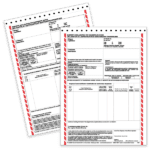 Shipping Forms |