
 The Simple Earbud
Why a Simple Product Can Create a Compliance Challenge
A consumer electronics company is preparing shipments of wireless earbuds to retailers across the United States. Each product consists of two earbuds and a rechargeable charging case, all powered by lithium-ion batteries.
At first glance, the products appear simple and low risk. However, the shipping team must determine the correct hazardous materials classification under the Hazardous Materials Regulations (49 CFR). To guide their decision, they refer to a DOT letter of interpretation (Ref. No. 20-0078), which clarifies how similar devices—such as hearing aids with charging cases—should be classified.
What the DOT Interpretation Clarifies
The interpretation explains that “equipment” is defined as the device powered by the battery, not the item supplying the power. In this scenario, the earbuds are the equipment, while the charging case functions as a battery pack rather than equipment.
Three Possible Shipping Scenarios
Based on this clarification, the company identifies three possible shipping scenarios:
Charging Cases Shipped Alone
When the charging cases are shipped alone, they are classified as UN3480, Lithium-ion batteries, because they are considered battery packs.
Earbuds Shipped Without the Charging Case
When the earbuds are shipped without the case, they are classified as UN3481, Lithium-ion batteries contained in equipment, since the batteries are installed in the device they power.
Earbuds and Charging Cases Shipped Together
When the earbuds and charging cases are shipped together in the same package, they are classified as UN3481, Lithium-ion batteries packed with equipment, because the battery (in the case) is packaged alongside the equipment.
Why Packaging Configuration Matters
This example is interesting because it illustrates how the same product can result in different regulatory classifications depending on how it is offered for transport. A simple change in packaging configuration directly impacts labeling, documentation, and applicable requirements.
The Compliance Takeaway
Classification is driven by function and shipping configuration, not by how a product is marketed or used by the consumer. Even everyday items like earbuds require careful evaluation to ensure compliance and safe transport.
Need Help Shipping Lithium Batteries?
Before you ship, make sure your lithium battery classification is correct. Contact ICC for help with lithium battery compliance. Explore ICC’s Lithium Battery FAQ for answers to common questions.
Stay up to date and sign up for our newsletter!
We have all the products, services and training you need to ensure your staff is properly trained and informed.
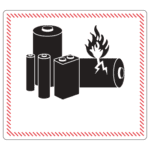 Lithium Battery Mark Lithium Battery Mark |
 Extover Extover |
 4GV Securepacc 4GV SecurepaccComplete Shipping Kit |


