
 National Battery Day (February 18)
Introduction: National Battery Day
Every year on February 18, we recognize National Battery Day, a day dedicated to one of the most important technologies powering modern life. Batteries quietly support nearly everything we do, from keeping our phones charged and our laptops running to powering medical devices, electric vehicles, and renewable energy systems.
National Battery Day is also more than a celebration of convenience. It is an opportunity to reflect on how far battery technology has come, and why proper handling and transportation compliance matter more today than ever before.
Early Experiments With Stored Energy
Although batteries feel like a modern invention, the story of stored electrical energy stretches back much further than most people realize. One of the earliest artifacts often associated with electricity is the so-called Baghdad Battery, discovered in Iraq and believed to date back to around 250 BC to 224 AD. This object consisted of a clay jar containing an iron rod and a copper cylinder. While historians still debate its true purpose, some researchers have suggested that, if filled with an acidic liquid, it may have functioned similarly to a primitive galvanic cell. Whether it was truly used to generate electricity or served another purpose, the Baghdad Battery remains an intriguing glimpse into early experimentation with electrical concepts.
The Birth of the Modern Battery
The first true breakthrough toward the modern battery came much later, in the year 1800, when Italian physicist Alessandro Volta created the first recognized electrical battery. Volta developed what became known as the voltaic pile, made by stacking alternating layers of zinc and copper separated by saltwater-soaked cloth. This invention produced a continuous electrical current for the first time and marked the beginning of electrochemical battery science. National Battery Day is celebrated on February 18 specifically because it is Volta’s birthday. You can learn more about Alessandro Volta and his contributions to electricity.
Rechargeable Batteries and the Road to Lithium
As battery technology advanced, the next major leap came in 1859, when Gaston Planté invented the first rechargeable lead-acid battery. This chemistry is still widely used today in automotive starter batteries and backup power systems. Over the next century, battery development continued steadily, leading to the lithium-based chemistries that now dominate modern electronics.
The Lithium-Ion Revolution
The commercialization of lithium-ion batteries in 1991 changed the world. These batteries enabled portable electronics, global communication, and the rapid growth of electric vehicles. However, their high energy density also introduced new safety challenges that have made lithium batteries one of the most regulated products in transport today.
Batteries in Everyday Life
It is difficult to imagine daily life without batteries. They are found in phones, tablets, power tools, warehouse scanners, medical devices, e-bikes, scooters, and countless consumer products. As industries become more electrified and connected, battery demand continues to rise rapidly.
Why Battery Compliance Matters
But with that growth comes increased responsibility. Batteries are not just consumer products — they are energy systems that require careful control throughout the supply chain.
Lithium Batteries as Dangerous Goods
Unlike traditional alkaline batteries, lithium-ion and lithium metal batteries are classified as dangerous goods in transportation. This is because lithium batteries can overheat, short circuit, enter thermal runaway, and ignite under certain conditions. Even a small cell can cause a significant incident if it is damaged, improperly packaged, or shipped without the required hazard communication.
Battery fires are difficult to extinguish, produce toxic smoke, and pose serious risks in cargo holds, containers, trucks, and warehouses.
Battery Incidents and Global Regulations
Battery incidents have occurred across every mode of transport. Undeclared lithium batteries have caused aircraft cargo fires, damaged ground shipments, and containerized ocean transport events involving mixed dangerous goods.
That is why battery shipments are regulated worldwide under frameworks such as:
- 49 CFR (U.S. DOT)
- IATA Dangerous Goods Regulations (Air)
- IMDG Code (Ocean)
- TDG Regulations (Canada)
Compliance is not optional — it is essential for safety and enforcement protection.
Key Compliance Fundamentals for Battery Shipments
National Battery Day is the perfect time for organizations to revisit a few critical compliance fundamentals.
Classification must always come first. Shippers must confirm whether they are offering batteries as UN3480, UN3481, UN3090, or UN3091, and whether the shipment is fully regulated or eligible for exceptions. The correct shipping name depends not only on the battery chemistry, but also on whether it is shipped alone, packed with equipment, or contained in equipment.
Packaging is equally critical. Batteries must be protected against damage, movement, and short circuits. Improper packaging remains one of the most common contributors to lithium battery transport incidents.
Marking and labeling requirements must also be followed. Many shipments require lithium battery marks, Class 9 hazard labels, UN number markings, and overpack communication where applicable. Missing or incorrect marks are among the most frequent enforcement findings.
Finally, training is required. Anyone involved in preparing lithium batteries for transport must be trained under the applicable dangerous goods regulations. Training is not just a regulatory requirement — it prevents real-world accidents.
A Reminder of Innovation and Responsibility
National Battery Day is a reminder of the innovation behind battery technology, from early discoveries like the Baghdad Battery to Volta’s first modern electrical cell and today’s lithium-powered world.
Batteries may be small, but the hazards and compliance responsibilities associated with them are significant. Safe battery transport protects workers, carriers, passengers, customers, and the integrity of global supply chains.
Need Help Shipping Batteries Safely?
ICC Compliance Center helps organizations navigate lithium battery shipping requirements across ground, air, and ocean transport.
If you need support with classification, packaging instructions, marking and labeling, training programs, documentation review, or proof of compliance, we are here to help. Our team of experts is just a call away for our customers at 855.734.5469 or send us an email, we’re happy to help.
Stay up to date and sign up for our newsletter!
We have all the products, services and training you need to ensure your staff is properly trained and informed.
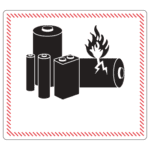 Lithium Battery Mark Lithium Battery Mark |
 Hazard Class 9 Hazard Class 9Lithium Battery Label |
 4GV Securepacc 4GV SecurepaccComplete Shipping Kit |


 ICC USA
 ICC Canada