
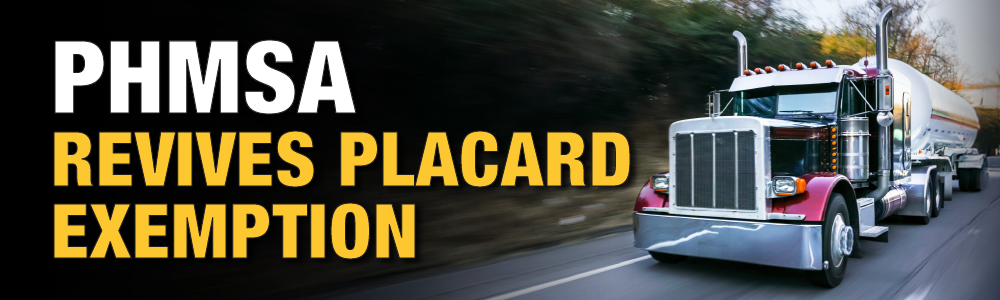
PHMSA Restores a Longstanding Fuel Placarding Exemption
Overview of the 2026 Final Rule
On January 12, 2026, the Pipeline and Hazardous Materials Safety Administration (PHMSA) published a final rule in the Federal Register (Docket 2026-00578) titled Hazardous Materials: Eliminating Unnecessary Regulatory Burdens on Fuel Transportation. This rule introduces targeted updates to the Hazardous Materials Regulations (HMR) that modernize cargo tank inspection requirements and restore a long-standing placarding exemption for certain fuel shipments.
PHMSA estimates these changes will generate $145.3 million in annualized cost savings, while maintaining the same level of safety for hazardous materials transportation.
Modernizing Cargo Tank Inspection Requirements
One key component of the rule allows the use of new and emerging inspection technologies for cargo tanks. Historically, the HMR prescribed specific inspection methods that did not fully account for advances in inspection tools and techniques. The 2026 rule updates those requirements, giving regulated entities flexibility to use alternative technologies that meet PHMSA’s safety intent.
By allowing these newer methods, the rule reduces inspection time, labor costs, and administrative burden, particularly for carriers operating large fleets of cargo tanks.
The Return of a Longstanding Fuel Placarding Exemption
The most notable change for fuel transporters is the restoration of a placarding exemption that existed for decades prior to 2013.
HM-118 (1980): Establishing the Original Exemption
The exemption originated in HM-118, a rulemaking published in 1980. Under this framework, cargo tanks transporting petroleum distillate fuels were permitted to display the placard and identification number corresponding to the lowest flash point fuel loaded on the tank during the current or previous day.
This approach recognized real-world fuel distribution practices, where cargo tanks often carry different grades of fuel in rapid succession. The exemption reduced the need to change placards between loads while still providing emergency responders with conservative hazard information.
HM-219 (2013): Unintentional Removal
In 2013, PHMSA issued HM-219, a broader harmonization rulemaking. During that process, the longstanding fuel placarding exemption was unintentionally removed from the HMR. As a result, carriers were required to strictly update placards and identification numbers for each specific fuel shipment, increasing compliance costs and operational complexity without a corresponding safety benefit.
In the 2026 final rule (2026-00578), PHMSA acknowledges that the exemption’s removal created unnecessary regulatory burden. The agency reinstates the exemption, effectively returning the regulations to the intent established under HM-118.
PHMSA emphasizes that the restored exemption is consistent with safety objectives and reflects decades of successful implementation prior to 2013.
What the Restored Exemption Means for Industry
For fuel carriers, shippers, and compliance professionals, the reinstated exemption means:
- Reduced need for frequent placard and marking changes
- Lower administrative and labor costs
- Regulatory clarity aligned with historical practice
- No reduction in safety or emergency response effectiveness
Implications for Regulators and Enforcement
For regulators and enforcement personnel, the change restores a familiar and well-understood compliance framework that had been in place for over 30 years.
Conclusion: Reducing Burden While Preserving Safety
This final rule reflects PHMSA’s broader effort to eliminate unnecessary regulatory burdens while preserving safety. By correcting the unintended consequences of HM-219 and updating inspection requirements to reflect modern technology, PHMSA demonstrates a willingness to revisit past rulemakings and adjust regulations based on practical experience.
The full text can be found HERE.
Voluntary compliance date: January 14, 2026
Effective date: February 13, 2026
Need help understanding how this rule impacts your operations? ICC Compliance Center has a team of full-time Regulatory Experts who have years of experience and are certified/recognized in their field of expertise. Ask us your tough questions by calling 888.442.9628 (USA) or 888.977.4834 (Canada) or send us an email.
Stay up to date and sign up for our newsletter!
We have all the products, services, and training you need to ensure your staff is properly trained and informed.
 Glass Shipping Kits Glass Shipping Kits |
 49 CFR Regulations 49 CFR Regulations |
 Worded Placards Worded Placards |


 ICC USA
 ICC Canada