
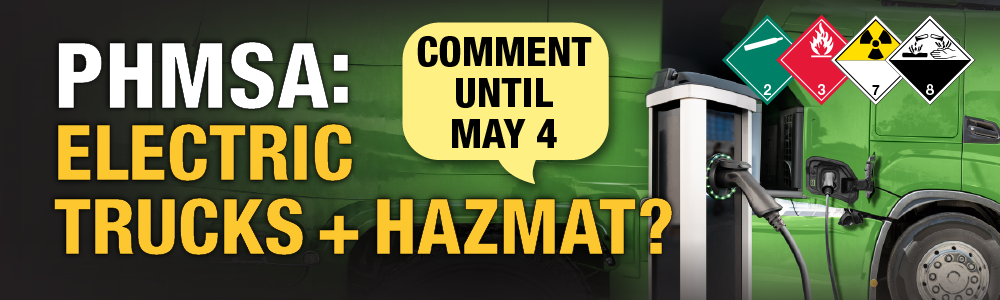
 PHMSA Seeks Input on Hazmat Transport in Electric Vehicles
Electric Trucks and the Future of Hazmat Transport
As more heavy-duty trucks begin switching from diesel to battery power, regulators are taking a closer look at what that shift could mean for dangerous goods transportation. The Pipeline and Hazardous Materials Safety Administration (PHMSA) is requesting comments from the public on the potential safety concerns, operational differences, and regulatory implications of transporting dangerous goods in heavy-duty electric vehicles compared to traditional gasoline or diesel-powered trucks. The agency is particularly interested in understanding how electric vehicle technology could influence areas such as packaging performance, transportation safety, emergency response procedures, and regulatory compliance. Insights gathered through this request may help PHMSA determine whether additional research is needed to evaluate the risks and safety considerations associated with hazmat transport in electric-powered commercial vehicles.
What Feedback is PHMSA Looking For?
PHMSA is requesting comments from the public on seven different categories relating to electric vehicles and the transport of dangerous goods. The main objective of these comments is to compare the risks between heavy-duty EVs and gas or diesel motor carriers, with a focus on hazmat packaging and product safety, as well as risks to the vehicles. Below is an example of one of the categories, “Hazmat Packaging and Containment Risks” and the questions they are requesting input on.
Hazmat Packaging and Containment Risks
- What, if any, differences exist in containment failure risks resulting from heat generated by EV batteries compared to fuel-based (ICE) systems?
- How does the weight distribution and the increase in total powertrain weight of EV batteries affect cargo safety compared to ICE motor carriers?
- Are there certain types or classes of hazardous materials (e.g., flammables, corrosives, or explosives) that pose an increased risk when transported by EVs versus ICE motor carriers?
- What additional testing methods or materials research could enhance hazmat packaging performance for use in both EV and ICE transportation applications?
- Is it possible for an EV battery or battery system to produce or emit wireless signals (i.e., radiofrequency signals) that could interfere with cargo or onboard communications (i.e., packaging tracking and monitoring systems), or cause harm to sensitive materials, such as electronic detonators?
- What concerns or risks do you believe might be associated with transporting bulk hazardous materials—such as propane—in cargo tanks on EV chassis compared to traditional ICE trucks, including both permanently attached and portable (non-attached) tanks? Please include perspectives on safety, reliability, and any other challenges this configuration might present.
Where to Submit Comments
You can view the full list of the seven categories PHMSA is requesting feedback on in the Federal Register notice on hazmat transportation risks in heavy-duty electric vehicles (2026-01989). Comments are due by May 4, 2026, and should reference Docket Number PHMSA-2025-0678.
What This Means for the Industry
As the transportation industry continues to evolve, understanding how new vehicle technologies may impact the safe movement of dangerous goods is critical. By requesting feedback from carriers, shippers, emergency responders, and other industry stakeholders, PHMSA hopes to gain a clearer picture of the potential risks associated with heavy-duty electric vehicles. The information gathered through this request for feedback will help guide future research and may ultimately influence how the transportation regulations adapt to emerging vehicle technologies in the years ahead.
Do you have questions about hazardous materials? Our team of experts is just a call away for our customers at 855.734.5469 or send us an email, we’re happy to help.
Stay up to date and sign up for our newsletter!
We have all the products, services and training you need to ensure your staff is properly trained and informed.
 49 CFR Publications 49 CFR Publications |
 UN Approved UN ApprovedPackaging and Boxes |
 Hazard Class Labels Hazard Class Labels |


 ICC USA
 ICC Canada