
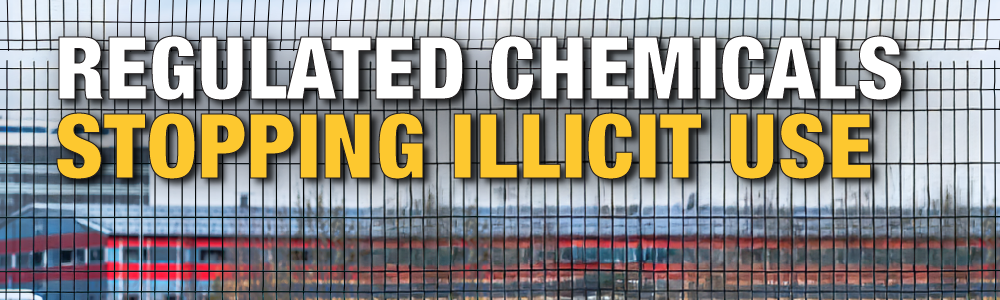
 Chemical Precursors and Due Diligence
What Industry Needs to Know
The RCMP has released an extensive list of chemical products identified as potential precursors for illicit drug production. While the list is not exhaustive, it provides valuable insight into chemicals already known to be misused. This step shifts more responsibility onto industry to exercise due diligence when verifying customers and managing their supply chain.
Similarly, in the United States, the DEA maintains a comparable list of controlled and monitored chemicals. In fact, U.S. regulations go a step further by requiring companies to have written security plans in place when handling certain substances. Canada currently has no formal requirement under Transport Canada’s dangerous goods framework, but it is not difficult to imagine such measures becoming mandatory in the near future.
Why This Matters for Canadian Businesses
Why does this matter for Canadian businesses? Because the risk does not always come from unknown buyers. In some cases, individuals within an organization or industry may exploit access to chemicals for illicit purposes—a scenario that feels more like a movie plot than reality, but one that happens, nonetheless.
Practical Due Diligence Measures
Even without a regulatory requirement, Canadian companies should adopt basic security practices as part of their due diligence. This includes not only knowing who you are selling your product to, but also maintaining strong internal controls. Consider the following steps:
- Know your customers and verify their legitimacy before supplying sensitive chemicals.
- Understand who has access to your storage facilities.
- Maintain accurate inventory records and regularly verify them.
- Lock doors and restrict access to storage areas.
- Ensure unauthorized personnel cannot enter secured zones.
Reducing Vulnerabilities Before They Become Problems
Common-sense measures like these reduce vulnerabilities, protect your business, and demonstrate responsible management of potentially high-risk materials.
Where to Learn More
For more details, you can consult the official lists here:
- RCMP Precursor Chemicals List (Canada) RCMP_Chemical_List_2025_06_30_Tiered_1_.01.pdf
- DEA List of Chemicals (U.S.) List I and II Regulated Chemicals – Alpha Order
Final Thought
Proactive security is not just about compliance—it is about safeguarding your business, your employees, and the community.
If you have questions, contact ICC Compliance Center at 855.734.5469 or send us an email, we’re happy to help.
Stay up to date and sign up for our newsletter!
We have all the products, services, and training you need to ensure your staff is properly trained and informed.
 TDG Regulations TDG Regulations |
 Shipping Dangerous Shipping DangerousGoods by Ground |
 NFPA Signs NFPA Signs |