
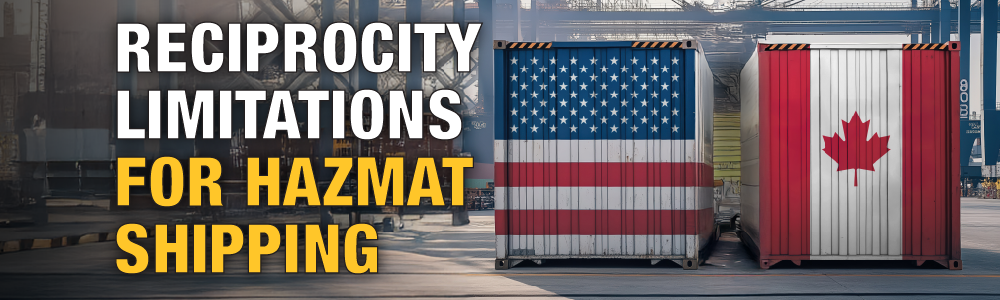
Limits of U.S.–Canada Reciprocity in Hazmat Shipping
When it comes to shipping hazardous materials or dangerous goods across borders, reciprocity agreements between countries can simplify the process. In North America, the agreement between Canada and the United States is a notable example, aimed at harmonizing regulations and facilitating smoother cross-border trade. However, these agreements come with their limitations, particularly for hazardous materials.
What is Reciprocity in Shipping?
Reciprocity agreements are arrangements where two countries agree to recognize each other’s regulations and standards. This can streamline processes like shipping hazardous materials by ensuring that both countries’ requirements are aligned. For Canada and the United States, this means that many aspects of hazardous material regulations are harmonized, greatly aided by the fact that both countries base their regulations on the United Nations recommendations on the transportation of dangerous goods.
Limitations of the Reciprocity Agreement
Differences in Regulations:
Despite the agreement, Canada and the U.S. have different regulations and standards for certain hazardous materials. For example, some materials classified as hazardous in one country might not be considered hazardous in the other. This discrepancy can lead to confusion and non-compliance if not carefully managed. Furthermore, additional requirements in the United States, such as including emergency procedure information on a shipping document (e.g., attaching the safety data sheet or indicating the emergency response guide number), can complicate compliance.
Variability in Enforcement:
Enforcement practices can differ between the two countries. While regulations may be aligned on paper, the actual enforcement can vary, leading to potential issues with compliance. What is accepted in one country may not always be handled the same way in the other, impacting the shipping process. Common errors can occur when enforcement officers on the ground are unaware of reciprocity agreements and may issue fines or rejections based on incomplete information, though without malicious intent.
Documentation and Labeling Requirements:
Even though there is an effort to standardize documentation and labeling, differences in required formats and details still exist. Shipments must meet the specific documentation and labeling requirements of both countries, which can be complex and confusing. For instance, in the United States, worded labels are used, whereas in Canada, international standard labels without words are typically employed. A common error in Canada occurs when individuals believe they must replace worded labels from the United States, but Canadian regulations provide an exemption if it’s indicated on the shipping document that the labeling is in accordance with 49 CFR. Similarly, the United States accepts international labels on shipments entering the country.
Updates and Amendments:
Regulations and agreements are subject to change. Updates in one country’s regulations may not always be immediately reflected in the other country’s standards. Keeping up with these changes is essential but challenging. For example, the countries may not update their regulations simultaneously, sometimes taking up to a year for one to catch up with the other after the United Nations makes changes.
Navigating the Challenges
To effectively navigate these limitations, businesses should:
- Stay Informed: Regularly review and stay updated on both Canadian and U.S. regulations related to hazardous materials.
- Consult Experts: Engage with compliance experts who specialize in international hazardous materials shipping. One valuable resource is a regulatory expert from ICC Compliance Center, a free service we provide to preferred clients who purchase products, services, or training from us.
Navigating U.S.–Canada reciprocity rules requires staying current with both countries’ hazardous materials regulations. ICC Compliance Center’s experts can help you stay compliant and avoid costly delays. Contact us today at 855.734.5469 to review your shipping processes or learn how our compliance solutions can support your cross-border operations.
Stay up to date and sign up for our newsletter!
We have all the products, services and training you need to ensure your staff is properly trained and informed.
 4GV UN Variation Boxes 4GV UN Variation Boxes |
 Shipping Hazmat Shipping Hazmatby Ground |



 ICC USA
 ICC Canada