
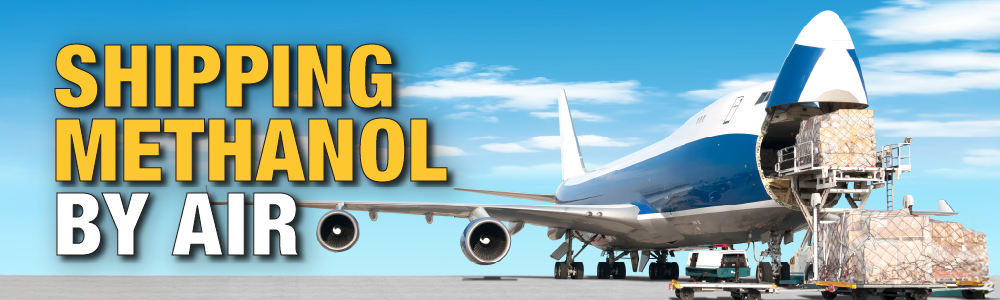
 Shipping Methanol by Air
Shipping dangerous goods by air can sometimes feel like navigating a complex maze, but having a true understanding of the IATA regulations can make it much more manageable. Methanol is a relatively common substance shipped by air worldwide, especially from industrial and commercial settings. It is often used for chemical production, fuel, and as a solvent to name a few. What you may not know is that methanol is classified as a flammable liquid, and you will need to ensure that it is properly packaged, labeled correctly, and accompanied by the necessary documentation per the IATA regulations.
Where to Find Methanol in IATA
As always, when you are shipping dangerous goods by air, it is important to look in The List of Dangerous Goods (the blue pages) in section 4.2 in IATA. Once you find UN 1230, Methanol, you will be directed to most of the important information needed to be in compliance with the IATA regulations.
Excepted and Limited Quantities
First things first, do we have any exemptions we can use? Depending on how much you are shipping inside of your package and per inner container, you may be able to ship as an Excepted Quantity or a Limited Quantity per columns F, G, and H. Please see my previous articles on shipping Excepted and Limited Quantities for details and what you would be exempt from.
What are Excepted Quantities?
Shipping Limited Quantities by Ground vs Air, What’s the Difference?
Fully Regulated Shipments
If your packaging limits exceed the threshold for Excepted of Limited Quantities, you will have to ship this as fully regulated dangerous goods.
Labeling and Documentation
When it comes to a fully regulated shipment, in terms of labeling, you would need both a class 3 flammable label as well as a toxic class 6.1 label on the outside of your packaging. This information is found in columns C and D. Also, as in most cases, a dangerous goods declaration is required when shipping by air.
Passenger Aircraft Packaging
When it comes to choosing your packaging, it really depends on whether you will be shipping by passenger or cargo aircraft only. For shipping on a passenger airplane, you must go to packing instruction 352 (PI 352) to see the type of packaging allowed as well as the limits. In this case, you cannot exceed 1 liter per package when shipping on a passenger airplane. In addition, PI 352 lists many different types of compliant packaging that must have at least a PGII rating. Compliant outer packaging includes 4G boxes, metal, and plastic drums and 4D wooden boxes to name a few. In this case, single packaging is not allowed, so the above-mentioned would have to be combination packaging.
Cargo Aircraft Only
If your limits exceed 1 liter or if you are using a single packaging, you will have to ship the methanol on a cargo only flight. This means you will not only have to add a Cargo Aircraft Only label, but you would have to go to packing instruction 364 for more details.
Cargo Aircraft Packaging
PI 364 does allow for both single and combination packaging to be used, and the allowable limits are much higher. For example, the total net quantity per package can go up to 60 liters as long as you follow the inner packaging limits listed for combination packaging. Compliant packaging includes 4G boxes, metal, and plastic drums, 4D wooden boxes, plastic, and metal jerricans, and composite packaging with at least a PGII rating.
How ICC The Compliance Center Can Help
Shipping methanol on cargo aircraft only allows for higher limits and more packaging flexibility. ICC The Compliance Center provides IATA-compliant dangerous goods packaging built for methanol air shipments. Contact our experts to get the right solution and ship with confidence.
Stay up to date and sign up for our newsletter!
We have all the products, services and training you need to ensure your staff is properly trained and informed.
 IATA DGR IATA DGR |
 Limited Quantity Label |
 US 49 CFR Publications US 49 CFR Publications |


 ICC USA
 ICC Canada