
 Are your Personal Items Subject to DG Regs?
Introduction: Do Dangerous Goods Regulations Apply to Personal Items?
When it comes to transporting personal items like batteries, gas cans, cleaning products, or even scuba tanks, one common question is whether the dangerous goods regulations apply. The answer really depends on the purpose of transportation, specifically whether the items are being moved in commerce or if they are for personal use.
What Is “Commerce” Under 49 CFR?
Commerce is defined in the 49CFR in section 171.8 as trade or transportation in the jurisdiction of the United States within a single state; between a place in a state and a place outside of the state; that affects trade or transportation between a place in a state and place outside of the state; or on a United States-registered aircraft. Historically, PHMSA also interprets “in commerce” to mean trade or transportation in furtherance of a commercial enterprise. But what does this mean if you are going scuba diving and have a tank in the trunk, or if you fill up a gas can for your lawn mower, or if you purchase a battery for your car, do the dangerous goods regulations still apply to you?
Personal Use vs. In Commerce
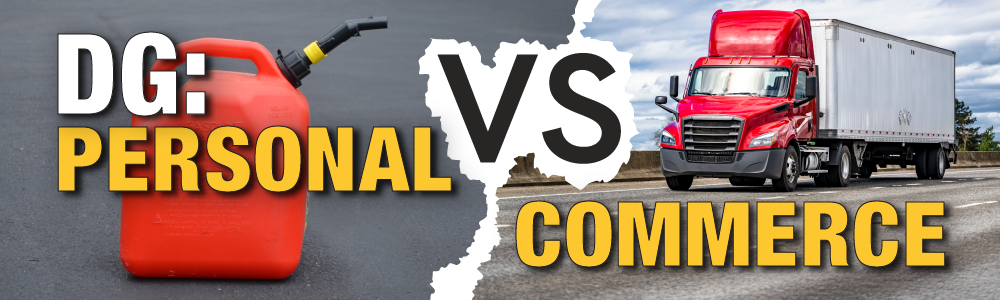
Luckily PHMSA has released several interpretations throughout the years which clearly answer this question and defines personal use vs. in commerce. For example, in this interpretation, it says a driver who transports his or her own personal belongings such as a battery-operated cell phone, medical device, GPS device, or gas can for personal, non-commercial use is not considered “in commerce” as defined by PHMSA. Therefore, those personal belongings mentioned above are not subject to the dangerous goods regulations. This means training, UN packaging, labeling, placarding is not required for those items. Now if that same driver was transporting other dangerous goods on a commercial truck on behalf of the motor carrier, in that case the dangerous goods regulations would apply.
Example: Scuba Tanks and Regulatory Applicability
Similarly, I found another PHMSA interpretation for someone questioning scuba tanks to go scuba diving. In this case, if someone is carrying the scuba tank for their own personal use, it would not be subject to the regulations. However, if a scuba instructor were to ship that same type of scuba tank to paying students, it would be subject to the dangerous goods regulations.
Conclusion: Why This Distinction Matters
These interpretations help us understand the difference between personal use and in -commerce. Understanding this difference helps you stay compliant and ensures the safe, responsible handling of dangerous goods. At ICC The Compliance Center, we can ensure you are compliant with the various regulations. Contact ICC today for more information.
Stay up to date and sign up for our newsletter!
We have all the products, services, and training you need to ensure your staff is properly trained and informed.
 Glass Shipping Kits Glass Shipping Kits |
 49 CFR Publications 49 CFR Publications |
 Placards Placards |


 ICC USA
 ICC Canada