
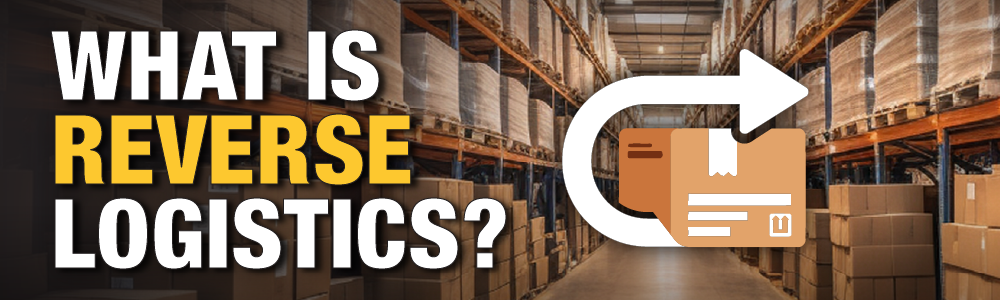
 Hazmat Returns and Reverse Logistics
Hazmat Returns Are Increasing
In today’s consumer-driven marketplace, an increasing number of products are being returned to retailers and manufacturers—some of which are classified as hazardous materials (hazmat). These returns introduce unique challenges, especially when it comes to safety and compliance with federal regulations. The U.S. Department of Transportation’s Pipeline and Hazardous Materials Safety Administration (PHMSA) has developed guidance to help businesses navigate this complex area under the Hazardous Materials Regulations (HMR; 49 CFR Parts 171–180).
Here’s a breakdown of what you need to know from PHMSA’s brochure on hazmat returns and reverse logistics.
Why Everyday Products Can Be Hazardous Materials
Many everyday consumer products—such as batteries, fuels, and cleaning supplies—are considered hazmat due to the risks they pose during transportation. These materials must be properly classified, packaged, labeled, and documented according to the HMR.
Key Responsibilities for Hazmat Shippers
Key responsibilities for hazmat shippers include:
- Correct classification (the foundation for all other requirements)
- Use of the proper UN identification number and shipping name
- Compliance with packaging, labeling, and documentation requirements based on the Hazardous Materials Table (HMT, § 172.101)
Additional Risks With Returned Hazardous Materials
When hazmat items are returned, additional risks can emerge. For example, used internal combustion engines may still contain fuel, or damaged lithium batteries may pose greater hazards than new ones.
Often, retail employees and consumers lack proper training to recognize and handle these risks, increasing the potential for regulatory violations or accidents during transportation.
What Is Reverse Logistics?
So, what is Reverse Logistics? PHMSA defines reverse logistics as the transportation of goods from a retail location back to the supplier, manufacturer, or distributor for credit, recall, recycling, or similar purposes (§ 171.8). This only applies to ground (highway) transport—not air, rail, or vessel.
Note that hazardous waste and materials covered by a DOT Special Permit are not eligible for reverse logistics exceptions.
Limited Quantity Exceptions for Hazmat Returns
Some hazmat returns qualify for limited quantity exceptions, allowing reduced packaging and labeling requirements when shipping small amounts. Packages must display the limited quantity marking, and eligibility depends on the material’s hazard class and quantity limits listed in the Hazardous Materials Table.
How Reverse Logistics Works
How does reverse logistics work? First, the product must qualify as a limited quantity. The shipment must be by highway only. The product must be returned to a retail store, a manufacturer, a supplier, or a distributor.
Special Rules for Lithium Batteries
Note that lithium batteries, even in consumer electronics, are not eligible for the reverse logistics exception due to their unique hazards (§ 173.185). They must be shipped under complete hazmat requirements or specific guidance for damaged, defective, or recalled (DDR) batteries.
Private vs Non-Private Carriers
The HMR outlines different requirements depending on whether a private carrier (e.g., the retailer’s own truck) or non-private/common carrier (e.g., FedEx, UPS) is used:
Non-Private Carriers
- Materials must be authorized as limited quantity and permitted for reverse logistics in their packaging section
- Only certain hazard classes qualify (e.g., flammable liquids, corrosives, gases)
Private Carriers
- Broader allowances, including for fireworks, gas-powered devices, and flammable liquid equipment, under specific conditions
- Must follow fuel isolation and packaging requirements
- May use the marking “REVERSE LOGISTICS—HIGHWAY TRANSPORT ONLY—UNDER 49 CFR 173.157” as an alternative to limited quantity marks
Training Requirements for Hazmat Returns
Typically, hazmat employees require training in general awareness, function-specific duties, safety, and security (§ 172.704). However, under the reverse logistics exception, a simplified approach is allowed. Employees must be provided clear written instructions on classification, packaging, and transportation procedures, and these instructions may be issued by the manufacturer, supplier, or distributor, or delivered through standard hazmat training.
Final Thoughts
Hazmat returns may be complex, but they don’t have to be confusing. With proper understanding and clear procedures, retailers and carriers can manage reverse logistics efficiently and safely. Not sure if your hazmat returns comply with 49 CFR? Reach out to ICC and our regulatory experts can help.
Stay up to date and sign up for our newsletter!
We have all the products, services and training you need to ensure your staff is properly trained and informed.
 Lithium Battery Lithium BatteryShipping Kit |


 ICC USA
 ICC Canada